Turning a coach's database course into a tool agents use
Agents now clean up their CRM inside the platform they already work in, a few contacts at a time, and finish with a ranked list of who to call first.
In 30 seconds
Problem. An agent's CRM fills up with people they'll never call. A coach teaches a good method for fixing that, but it lived in a course, not in the place agents do the work.
What I did. I led the design of the whole flow, from the course to the shipped screens, over 14 rounds in about 11 weeks. I also built two parts of it in code myself.
Result. It's been live for agents since mid-November 2026, and I'm training the customer success team on it.
- My role
- Lead designer for the whole flow
- Worked with
- The product director, who owned the keep-or-let-go interaction
- When
- September–November 2026
- For
- Agents on Follow Up Boss or Lofty
Knowledge in
A coach's method for keeping a database worth calling: who to keep, who to let go, and how to rank the rest
What I designed
The flow and its screens: connect, read, sort, send
Experience out
An agent ends with a ranked call list, tagged in their CRM
How it works
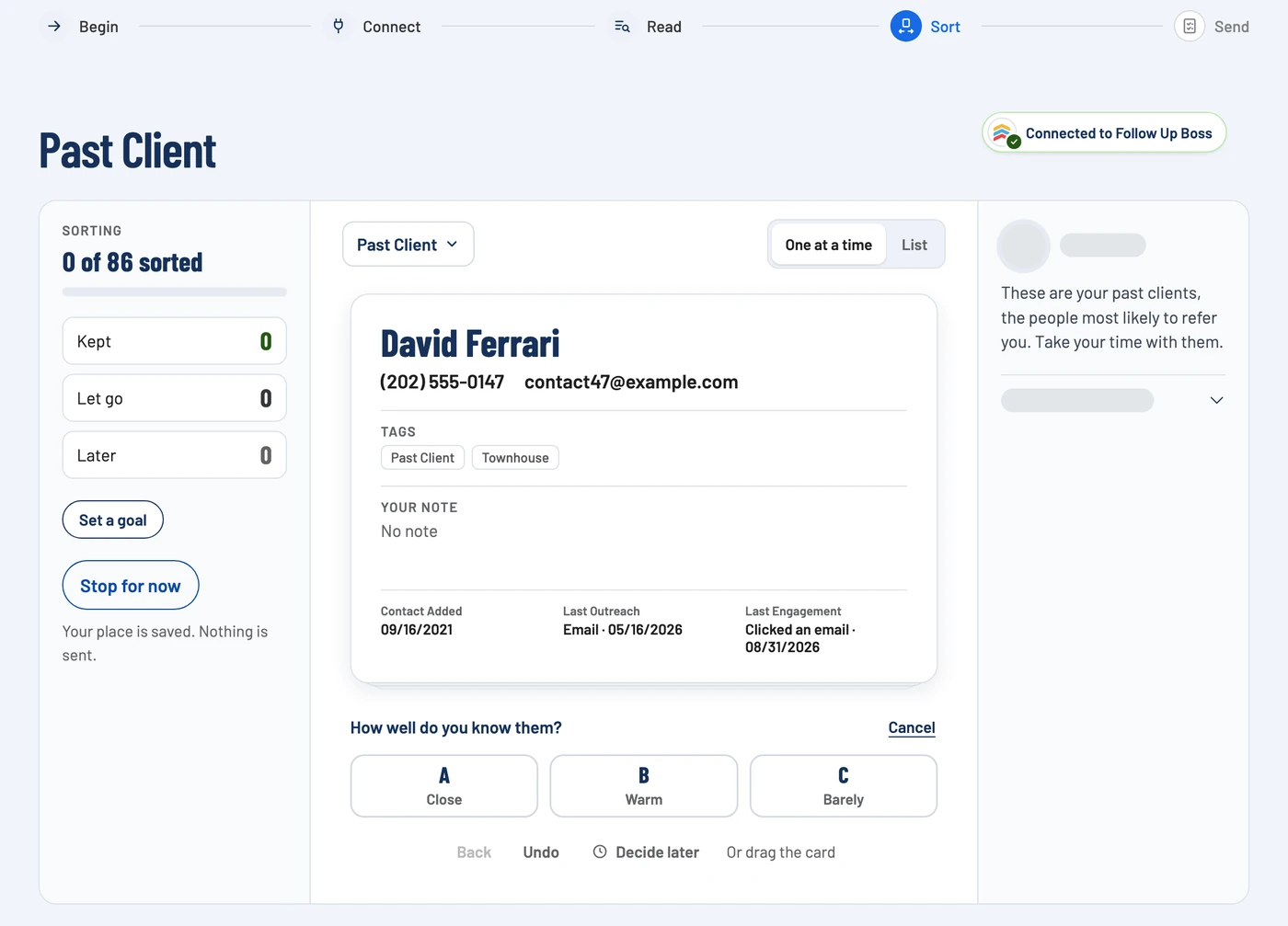
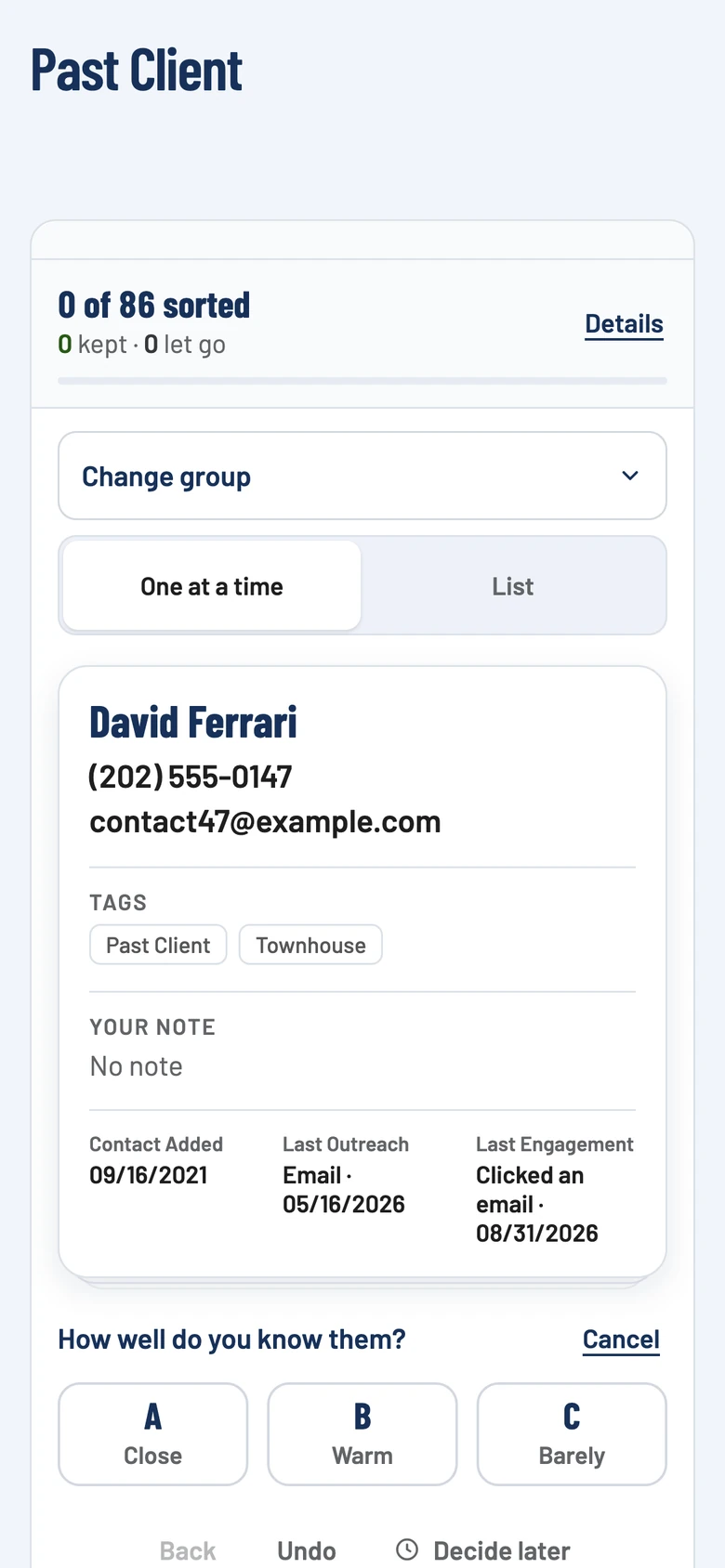
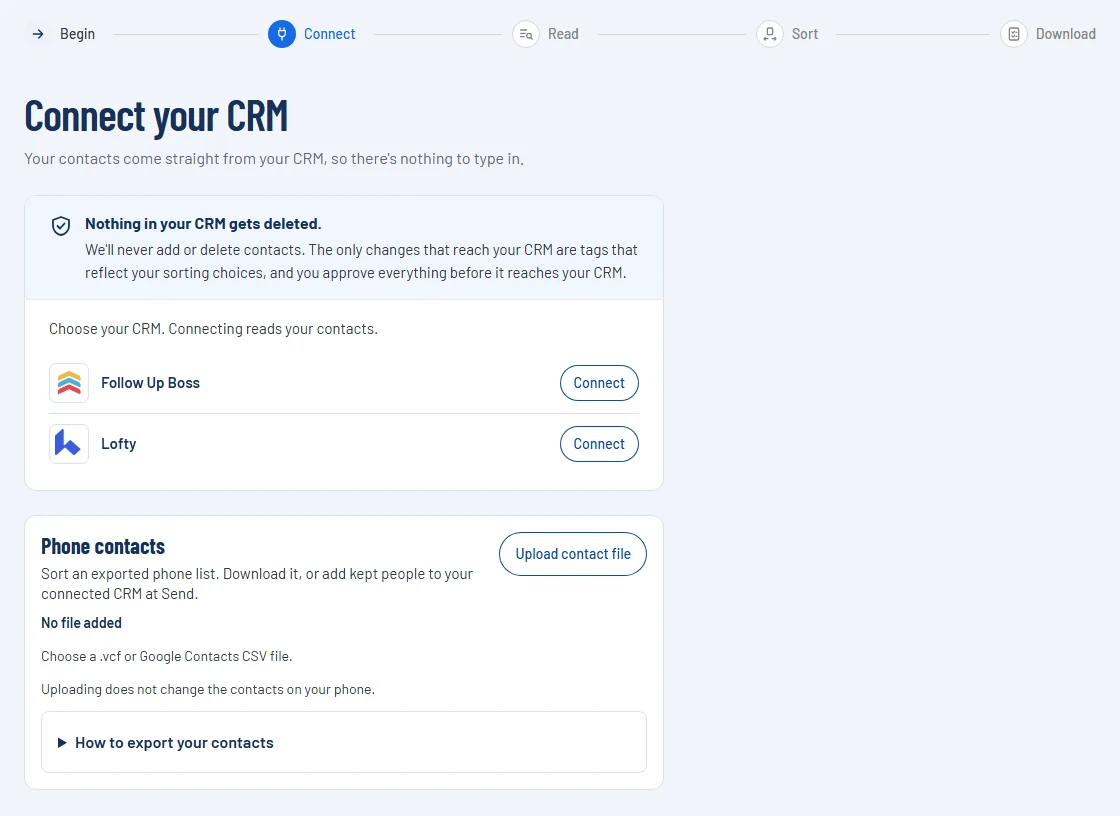
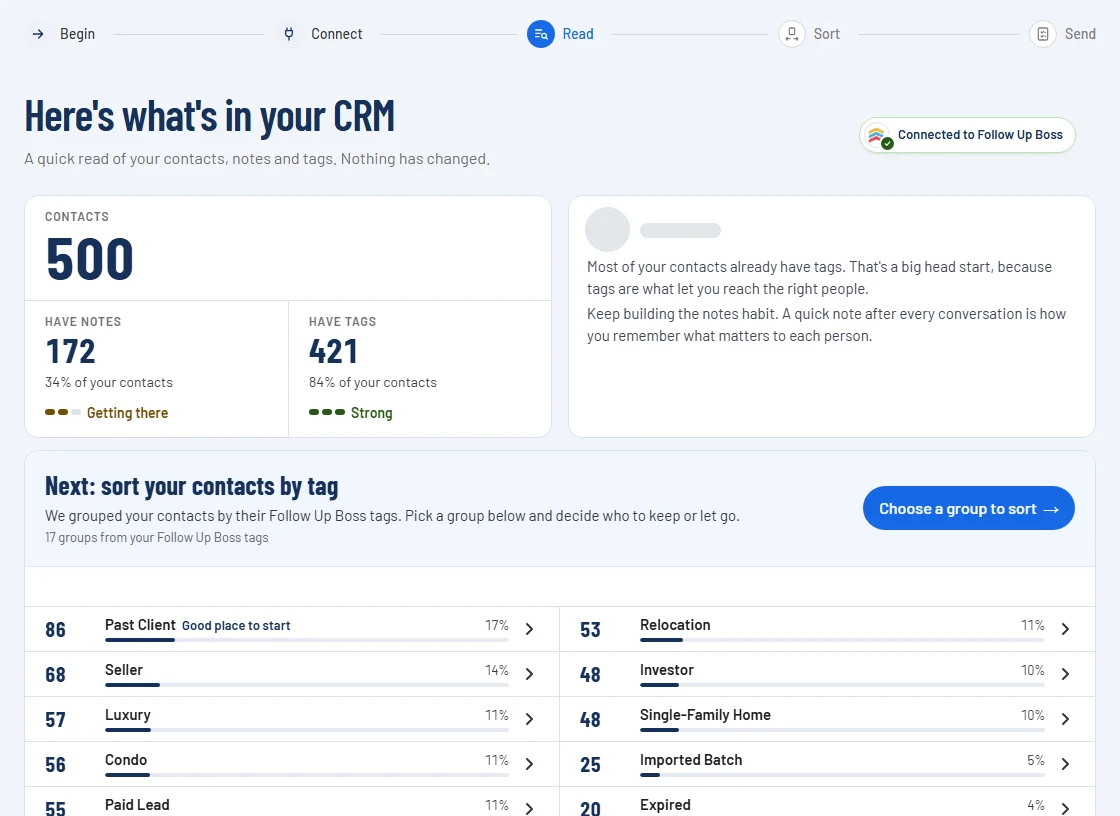
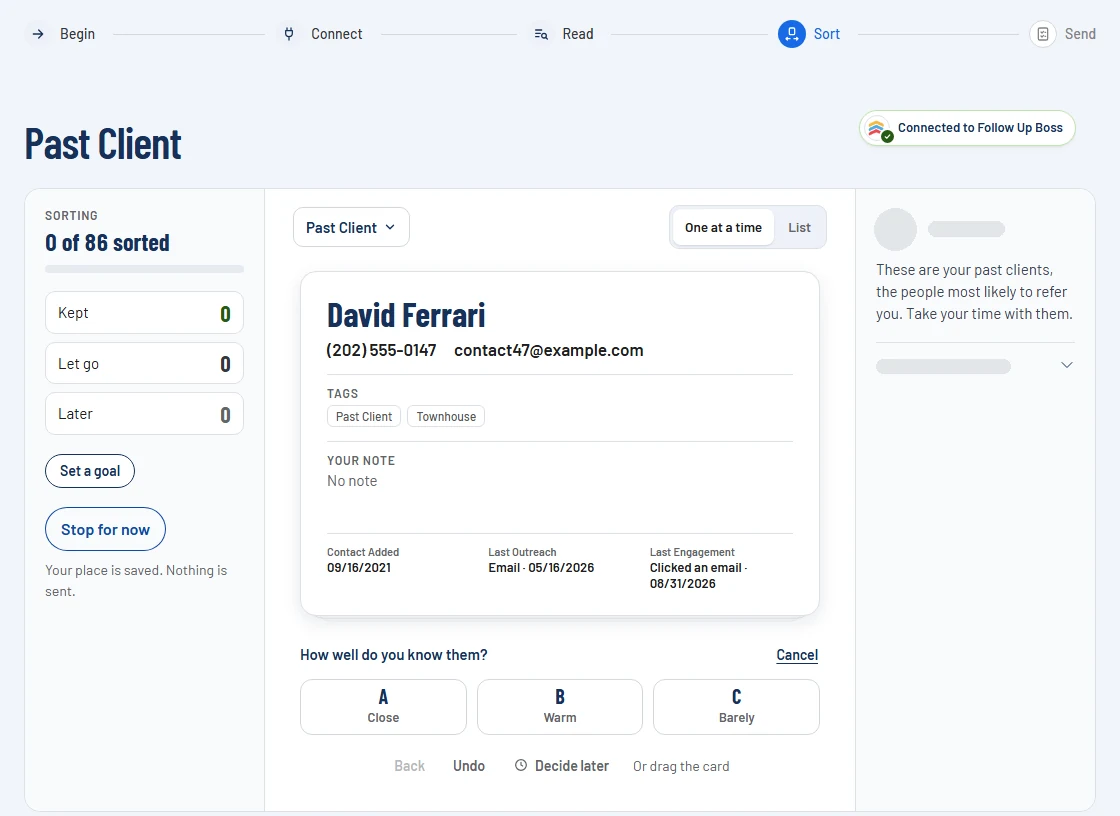
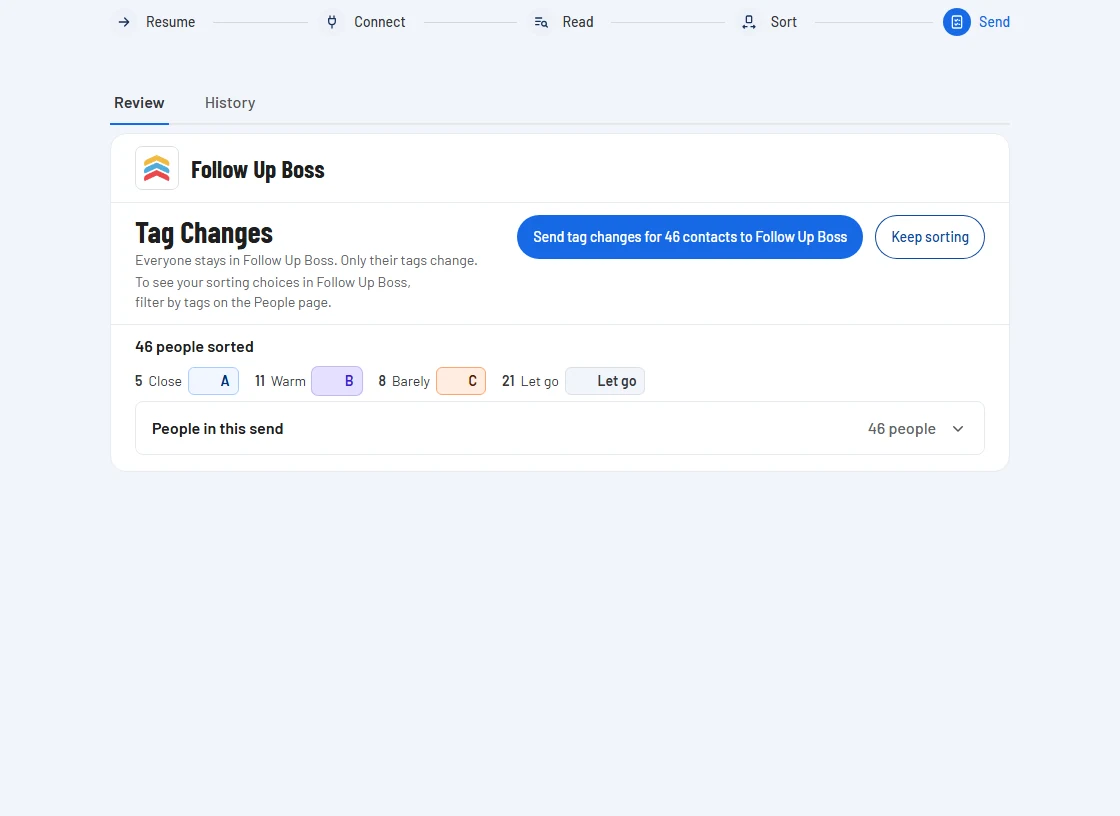
Four steps, and nothing changes in the CRM until the agent says so.
Decisions
Three calls that shaped it.
Not an audit
It started life as the "CRM audit tool". An audit sounds like someone checking your work. This is a cleanup agents do for themselves, so I renamed it and wrote the copy to match.
The agent decides, a few at a time
The tool reads the CRM, but the agent makes every call. Sorting happens a few contacts at a time, and the copy never claims the tool cleans anything up on its own.
End on a reason to call
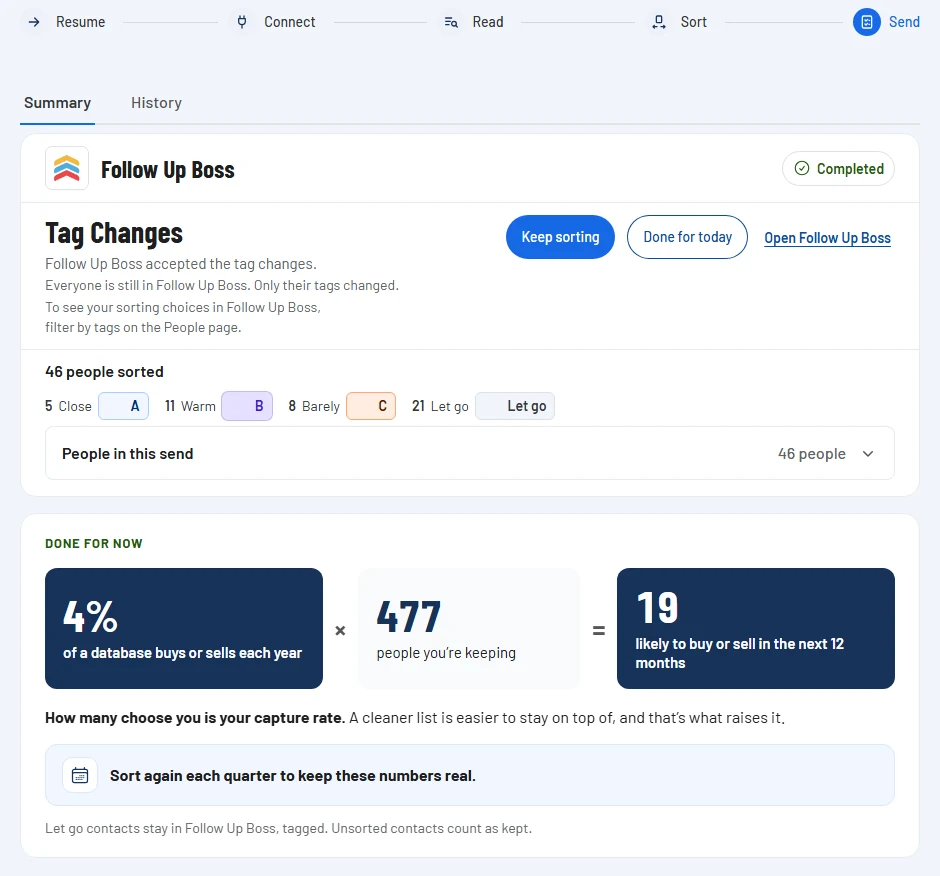
Sending tags is a chore, so the last screen gives the work a point. About 4% of a database buys or sells each year, so the people an agent keeps turn into a number worth calling: how many are likely to move in the next 12 months.
In code
I shipped two parts myself
Beyond the design, I built the payoff panel and the start screen with its intro film, and both went into the platform's codebase through pull requests.
What shipped, and the result
In October, testers could use the tool but didn't see why they should. So I added guidance where agents start, and a short intro film that makes the case before they begin. It went live for agents in mid-November 2026, and on 30 November I'm training the customer success team, about 15 people, to support it.